
Our eyes are not limited to what is in front of us. Instead, they constantly move and adjust to different environments to capture information from the world around us. This natural
movement of the head and eyes is referred to as Dynamic Vision, a new concept that plays a crucial
role in
understanding how we interact with our visual environment.
Dynamic Vision refers to our movement patterns and visual behavior as we adjust our focus to various objects at different distances. Each person has a unique Gaze Dynamic, which is influenced by factors such as:
The natural flow of our eyes is unrestricted when we are not wearing corrective lenses, allowing us to freely focus on different distances and objects. However, when we wear corrective lenses—and especially progressive lenses—this natural flow can be disrupted. This is precisely where understanding and adapting to Dynamic Vision becomes crucially important.
Without corrective glasses, our eyes move and focus effortlessly on whatever we want to see, whether it’s near or far, without any limitation. However, when we wear progressive glasses, this flow is often restricted by the very design of the lens.
Progressive lenses typically have multiple focal points that transition smoothly from one distance to another. However, unwanted peripheral distortions or astigmatisms inevitably occur at the edges of the lens, which can affect the natural movement of the eyes and make it difficult for the user to follow their Gaze Dynamics in the same natural way as they would without progressive lenses.
This is why limited Dynamic Vision causes problems. The peripheral distortions caused by the lens can prevent the eyes from following their natural direction. In this way, the user’s Dynamic Vision is restricted by the imperfections of the lens, causing discomfort during use and difficulty in adaptation.
Understanding and mapping Dynamic Vision is the key to creating personalized and comfortable lenses. Traditionally, lenses were designed to meet general visual needs, but often did not align with our individual visual behaviors. The next step in lens design is to adapt the lens to us, not the other way around.
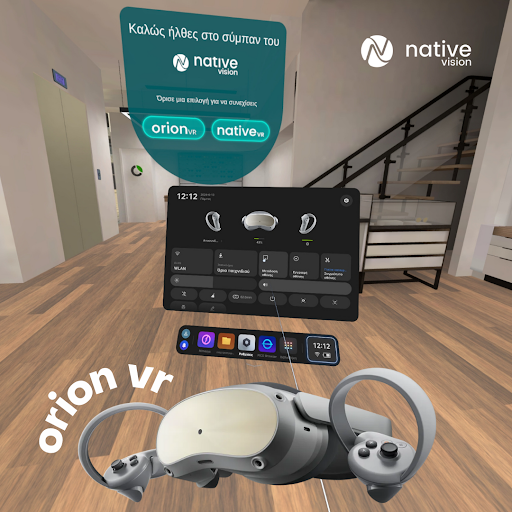
With the emergence of innovative technologies such as Virtual Reality (VR), it is now possible to record and measure our visual behavior (i.e., our Dynamic Vision) with precision and personalization. With Orion VR by Native Vision, we gain valuable data about each user's Dynamic Vision in order to create a fully personalized progressive lens tailored to our unique vision needs! This approach ensures that the user has a natural visual experience where the lenses adapt to them—not the other way around.
Dynamic Vision is a critical factor in understanding how we interact with our visual environment. By identifying the natural movements of the eyes and tailoring lenses to these “visual behaviors,” we can create much more effective and comfortable vision solutions.
What exactly is Dynamic Vision?
Dynamic Vision refers to our movement patterns and visual behavior as we adjust our focus to various objects at different distances. Each person has a unique Gaze Dynamic, which is influenced by factors such as:
- Head movements
- Eye movements
- Visual attention and focus
The natural flow of our eyes is unrestricted when we are not wearing corrective lenses, allowing us to freely focus on different distances and objects. However, when we wear corrective lenses—and especially progressive lenses—this natural flow can be disrupted. This is precisely where understanding and adapting to Dynamic Vision becomes crucially important.
How does it affect our vision?
Without corrective glasses, our eyes move and focus effortlessly on whatever we want to see, whether it’s near or far, without any limitation. However, when we wear progressive glasses, this flow is often restricted by the very design of the lens.
Progressive lenses typically have multiple focal points that transition smoothly from one distance to another. However, unwanted peripheral distortions or astigmatisms inevitably occur at the edges of the lens, which can affect the natural movement of the eyes and make it difficult for the user to follow their Gaze Dynamics in the same natural way as they would without progressive lenses.
This is why limited Dynamic Vision causes problems. The peripheral distortions caused by the lens can prevent the eyes from following their natural direction. In this way, the user’s Dynamic Vision is restricted by the imperfections of the lens, causing discomfort during use and difficulty in adaptation.
The role of Dynamic Vision in personalized lenses
Understanding and mapping Dynamic Vision is the key to creating personalized and comfortable lenses. Traditionally, lenses were designed to meet general visual needs, but often did not align with our individual visual behaviors. The next step in lens design is to adapt the lens to us, not the other way around.
With the emergence of innovative technologies such as Virtual Reality (VR), it is now possible to record and measure our visual behavior (i.e., our Dynamic Vision) with precision and personalization. With Orion VR by Native Vision, we gain valuable data about each user's Dynamic Vision in order to create a fully personalized progressive lens tailored to our unique vision needs! This approach ensures that the user has a natural visual experience where the lenses adapt to them—not the other way around.
Conclusion
Dynamic Vision is a critical factor in understanding how we interact with our visual environment. By identifying the natural movements of the eyes and tailoring lenses to these “visual behaviors,” we can create much more effective and comfortable vision solutions.